Types Of Stainless Steel Cookware
Stainless steel cookware has long been a kitchen essential, known for its durability, sleek appearance, and resistance to rust or stains. However, not all stainless steel cookware is made the same. Let’s explore the three main types:
Single-Ply Stainless Steel
Single-ply stainless steel cookware is made from one layer of metal, usually stainless steel. It’s lightweight, affordable, and easy to maintain. However, due to its thin construction, it tends to heat unevenly and may develop hotspots, making it less suitable for precision cooking or high-heat recipes.
Impact-Bonded Base Cookware
This type of cookware features a thick disc of aluminium or copper bonded to the base of a stainless steel pot or pan. It improves heat distribution at the bottom but doesn’t extend through the sides. Great for boiling or simmering, but not ideal when uniform cooking is required along the sides.
Tri-Ply Stainless Steel Cookware
Tri-ply cookware features three layers - a core of aluminium or copper sandwiched between two layers of stainless steel. This construction ensures even heating from base to rim and significantly reduces hotspots. Tri-ply stainless steel cookware is the gold standard for home chefs and professionals alike, combining durability with performance.
Best Stainless Steel Cookware for Indian Cooking
The stainless steel cookware is widely used in an Indian kitchen because it does not react with ingredients and can withstand the high temperatures needed for cooking typical dishes. Here are some useful tips on how to cook Indian food using a stainless steel cookware set:
Tadka & Tempering: For tadka, a stainless steel pan will help you heat oil along with mustard seeds, curry leaves, and chillies without any loss of taste.
Deep Frying (Kadhai Cooking): The best cookware for frying Indian foods such as puri, pakora, or samosa is a heavy-bottomed stainless steel kadhai.
Slow-Simmered Dals & Curries: Stainless steel cookware, like a handi, saucepan or casserole, can be used for simmering dals or gravies because of its resistance to reactions with acids such as tomatoes and tamarind.
Pressure Cooking Staples: High-quality stainless steel pressure cookers are essential for boiling chickpeas, lentils, and potatoes quickly while retaining nutrients and hygiene.
Everyday Rotis & Parathas: For making soft rotis and crispy parathas, a good option will be a stainless steel tawa because it is completely free of chemicals.
Steaming Delicacies: Use a stainless steel steamer set for making soft dishes like idli, dhokla, or momos due to its easy sanitisation process and rust-resistance from steam.
Common Mistakes While Using Stainless Steel Cookware
No matter how good your stainless steel cookware is, it might underperform due to improper handling. Avoiding these mistakes will help you keep your cookware non-sticky and shiny for many years.
Adding Salt to Cold Water: Don't put salt into a pot that has only cold water. Wait until the water boils to avoid putting the salt at the bottom of the pot where pitting occurs. You'll get a bunch of white spots all over the surface of the metal.
Cooking on High Heat Constantly: Stainless steel has very good heat retention properties. If you're cooking something on high heat, your food is likely to leave some stains on the cookware. It is advisable to preheat the pot over medium heat.
Using Abrasive Scrubbers: Metal scourers like steel wool may damage the smooth finish of your kitchen pans and skillets. To avoid scratching their surfaces, make sure to scrub with a sponge or nylon brushes only.
The "Cold Food" Mistake: Putting cold food products like vegetables or pieces of meat into a hot pan will make them stick right away. Make sure that both your food and oil are at least at room temperature before using.
Adding Oil to a Cold Pan: To ensure you get a non-stick surface using the “Leidenfrost technique”, heat the pan dry, then pour the oil in. Oil added to a cold pan causes the food to stick to the surface during cooking.
Submerging a Hot Pan in Cold Water: A sudden temperature change can affect your stainless steel cookware's durability by warping its surfaces and making them lose their flat base. Make sure that you allow your pans to cool before washing them in cold water.
Neglecting White Chalky Spots: Cloudy-looking white spots on your pans indicate calcium deposits. Do not overlook these marks; they can be easily washed off using vinegar or lemon juice.
Tri-ply Cookware Options Available At Nestasia
Nestasia’s range of tri-ply stainless steel cookware blends function and design, making everyday cooking more rewarding. Each piece is compatible with induction cooktops and gas stoves, offering versatility and style.
Saucepan
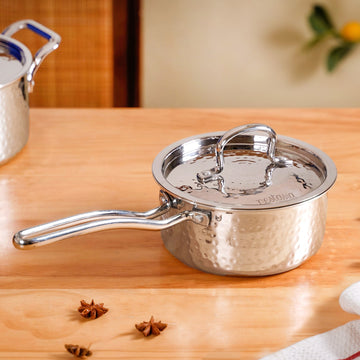
Whether you're boiling milk, making tea, or preparing sauces, a tri-ply saucepan ensures even heating and better temperature control. The comfortable handle and snug-fit lid make it a go-to for daily use. It's also a great fit for induction cooktops, making it a modern kitchen staple.
Kadai
The tri-ply kadai is ideal for sautéing vegetables, making curries, or deep frying. The curved sides and heat-retaining base cook food faster while locking in flavours. It's a smart upgrade for those who want better performance than traditional aluminium kadhais.
Casserole
Looking to simmer dals, soups, or stews? A tri-ply casserole is your best friend. The thick base prevents burning, while the mirror finish gives it a serve-worthy look. It doubles up as both a stock pot and a serving pot - perfect for family dinners and festive cooking.
Fry Pan
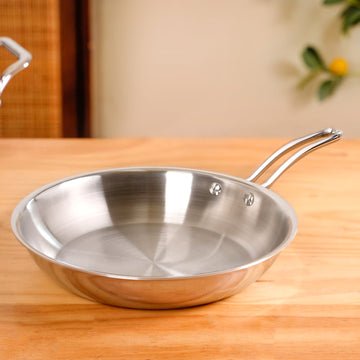
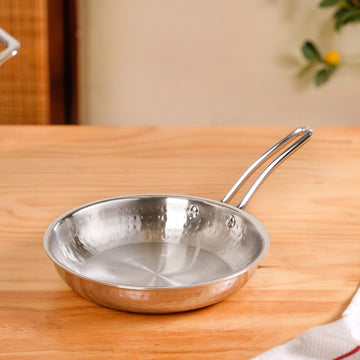
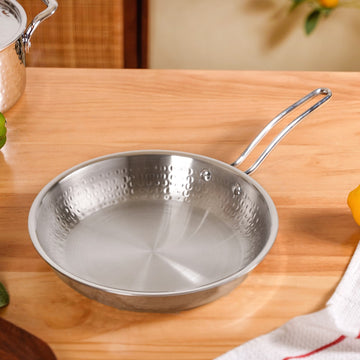
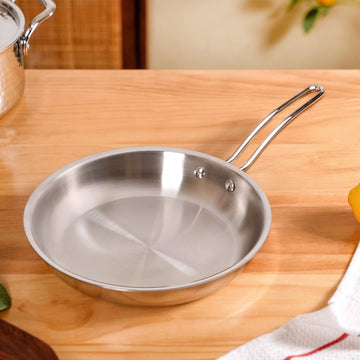
From morning eggs to evening stir-fries, a tri-ply frying pan offers excellent control and consistent results. It heats up quickly and evenly, making it suitable for both searing and simmering. Bonus: it’s dishwasher-safe and works on induction too.
Tadka Pan
Small but mighty, the tri-ply tadka pan is designed for tempering spices without burning. Its compact design and tri-layer construction allow precise heat control, enhancing the aroma and taste of your dals and sabzis.
Things To Consider Before Buying Stainless Steel Cookware
Not all stainless steel cookware is created equal. Before investing, look for these key factors to ensure you're getting the best stainless steel cookware:
- Ply or layering: Opt for tri-ply stainless steel cookware for consistent heating and better cooking results.
- Grade of stainless steel: Look for food-grade 304 stainless steel - it’s rust-resistant, non-reactive, and safe.
- Induction & gas compatibility: Ensure the cookware is compatible with induction cooktops and gas stoves for versatile use.
- Comfortable handles and weight: A well-balanced pan with a sturdy, heat-resistant handle improves ease of use.
- Lid quality and fit: Choose cookware with stainless steel or tempered glass lids that seal in heat and moisture.
Why Tri-Ply Stainless Steel is the Best Choice
The design of tri-ply stainless steel pans uses an aluminium core that is sandwiched by two high-quality layers of stainless steel.
Uniform Heating: With a 303-grade aluminium core, the pans are guaranteed to heat evenly and with no hot spots to prevent your food from burning.
Maximum Nutrition: It retains important vitamins and nutrients in your food with minimal use of oil because of high heat retention.
Induction Ready: Being made of 430 magnetic grade stainless steel on the outer surface, the pan can be used on any type of stove.
Extreme Durability: With a rust and scratch-resistant surface, these pans are built to last forever without ever warping.
Pure Flavour: The inner coating of 304-grade stainless steel is completely safe for cooking acidic foods such as tomato sauces without altering their taste.
Which Stainless Steel Cookware Is Best?
If you're wondering which stainless steel pots and pans are truly worth the investment, the answer is simple: tri-ply stainless steel cookware. It is not just a trend; it is a smarter, more efficient way to cook. What sets tri-ply cookware apart is its unique construction. A responsive aluminium core is sandwiched between two durable layers of stainless steel. This three-layer design allows for superior heat distribution, ensuring that the entire surface of the pot or pan, from base to rim, heats evenly. Say goodbye to hotspots that can scorch your food and lead to inconsistent results.
Whether you are simmering a delicate soup, boiling pasta, making rich gravies, or searing paneer tikka to perfection, tri-ply stainless steel gives you better temperature control and consistent cooking performance. The result is enhanced flavour, improved texture, and less time spent hovering over the stove.
Durability is another major advantage. Unlike non-stick or thin aluminium cookware, tri-ply stainless steel does not warp under high heat, is resistant to dents, and maintains its sleek shine even with daily use. It is also completely food-safe. There is no flaking, no chemical coating, and no reactivity with acidic ingredients. This means you can cook everything from tomato-based sauces to tangy lemon dishes without worrying about a metallic taste or contamination.
If you are looking for cookware that is versatile, reliable, and built to last, tri-ply stainless steel is the perfect choice. It works well on induction cooktops, gas stoves, and even in the oven, making it suitable for a wide range of recipes and cooking styles. Whether you are a beginner in the kitchen or a seasoned chef, this type of cookware is designed to meet the needs of modern-day cooking while retaining the timeless appeal of stainless steel.
What To Avoid While Buying Stainless Steel Cookware?
With so many options available in the market, it’s easy to get swayed by glossy packaging and bold claims. But not all cookware is made the same, and being mindful while shopping can save you from disappointment later. Here are a few things you should steer clear of when buying stainless steel cookware:
Cookware with poor finishing
Watch out for rough or sharp edges, flimsy handles, uneven polishing, or poorly fitted lids. These are signs of low manufacturing standards and can make cooking uncomfortable and even unsafe. Quality cookware should feel sturdy in your hands, have a smooth finish, and show attention to detail in its design.
Thin single-ply bases
Avoid cookware with extremely thin or single-layered bases. These heat up too quickly and unevenly, causing hot spots that burn your food. They also lose heat rapidly, which impacts cooking efficiency and control. For better heat retention and even cooking, go for multi-layered options like tri-ply construction.
Non-food-safe alloys
Low-grade or mixed-metal cookware may react with acidic ingredients like tomatoes, vinegar, or citrus, affecting the taste and safety of your food. Over time, such materials may also rust or corrode. Always check if the cookware is made from food-grade stainless steel, ideally marked as 304 or 18/8 stainless steel.
Exaggerated marketing claims
Be wary of labels that promise the impossible, such as “100% non-stick stainless steel”. Stainless steel, by nature, is not non-stick. However, when used with the right cooking techniques, like proper preheating and using the right amount of oil, it can deliver excellent results without sticking or burning food. Trust performance over hype.
Caring For Your Stainless Steel Cookware
Stainless steel cookware is built to last, but a little care can make it last even longer. Here are some simple tips:
- Let it cool before washing: Sudden temperature changes can warp the metal.
- Avoid steel wool: Use a soft sponge to prevent scratches.
- Use vinegar or baking soda for stains: These natural cleaners tackle tough burnt marks and maintain the shine.
- Dry immediately: Prevent water spots and keep your cookware looking pristine by drying it right after washing.
Other Kinds Of Cookware Options At Nestasia
While stainless steel is versatile, different recipes call for different cookware. Nestasia also offers a curated range of stylish and functional cookware beyond stainless steel.
Borosilicate Glass Cooking Pots
Transparent, elegant, and microwave-safe, borosilicate glass cooking pots offer a crystal-clear view of your meal as it simmers, eliminating the need to lift the lid. Featuring a specialised steam vent to prevent spill-overs and sturdy side handles for a secure grip, they are the perfect choice for slow-cooking aromatic soups or healthy herbal broths.
Ceramic Bakeware
Our ceramic bakeware collection includes baking dishes, ramekins, and casseroles in vibrant glazes. Ideal for baking lasagna, mac n cheese, or brownies, they’re microwave, oven, and dishwasher-safe.
Brass Cookware
Our range of high-quality brass cookware includes items such as handis, kadhais, and saucepans. They are free from lead and coated with 100% safe tin (kalai). This not only ensures that they are non-stick but also preserves the nutritional content of the food.
Cast Iron Cookware
For tough frying and slow roasting jobs, our range of seasoned cast iron cookware, such as tawas and pans, is ideal. It provides an entirely natural cooking surface that boosts flavour with each use and provides extra iron in your diet.
Why Choose Nestasia?
At Nestasia, our motto is simple and sincere: Design Meets Quality. We believe that the heart of every home lies in its kitchen, and that this space deserves to be as beautiful as it is functional. That belief shapes every product we create for your kitchen. From thoughtfully engineered handles to sleek finishes, our cookware is made to enhance not just how you cook, but how you feel while cooking.
Our range of tri-ply stainless steel cookware is designed to support every kind of kitchen journey - from quick weekday dinners to festive family gatherings. The triple-layered construction ensures excellent heat distribution, making each meal more efficient, flavourful, and consistent. Whether you use an induction cooktop, gas stove, or both, our cookware blends seamlessly into your everyday routine, helping you create your best meals without fuss.
But we don’t stop at function. We understand that your cookware is always on display, whether it's sitting on a shelf or simmering on the stove, which is why elegant aesthetics and ergonomic design are part of our core philosophy. Every pot, pan, and dish is created to look just as good as it performs.
If you're ready to refresh your kitchen with pieces that are equal parts stylish and reliable, Nestasia is here for you. Explore our complete cookware collection, which includes tri-ply stainless steel pans, borosilicate glass cooking pots, cast iron skillets, and oven-safe ceramic bakeware. Discover pieces that make cooking easier, hosting more joyful, and every meal a little more special.
FAQs
Which stainless steel cookware is best for daily use in India?
Tri-ply stainless steel cookware is the benchmark for Indian households. Considering that cooking in India requires high-temperature tempering (tadka) and prolonged simmering of gravies, the three layers ensure that the food does not burn on the bottom and preserve the spices' original flavour without interacting with the material.
Is tri-ply stainless steel cookware worth buying?
Certainly. Although it costs more initially, it is a one-time purchase. It heats uniformly from the bottom to the edges, saving gas, cutting down cooking time, and avoiding hot spots that can ruin food items. In contrast to non-stick pans, it will not flake off over time.
What is the difference between tri-ply and single-ply cookware?
While single-ply cookware consists of one single thin piece of steel, which causes inconsistent heat distribution and burnt food, tri-ply cookware is made up of an aluminium alloy core "sandwiched" by two pieces of steel. This makes heat transfer evenly throughout the pan, allowing you to have professional-quality food.
Which grade of stainless steel is safe for cooking?
Grade 304 (or 18/10 or 18/8) is a completely safe grade when it comes to using cookware, since it has excellent resistance to corrosion and rust, making it impossible for food to be contaminated, especially when dealing with acids such as tomatoes and lemons.
How do you prevent food from sticking to stainless steel cookware?
It is done through the "Leidenfrost Effect". First, warm up your dry pot on medium heat and wait for the water you flick into the pot to become a little ball rolling around just like a marble. Then add some oil and wait for it to shimmer before you add the food.
Can stainless steel cookware be used on induction cooktops?
Yes, only when it has a magnetic base. Stainless steel pots that use 430 magnetic steel for their exterior layers will be able to work on an induction stove, as well as on gas and even glass top stoves. Make sure to look out for the 'induction safe' marking on the base of your stainless steel pots.
What are the disadvantages of stainless steel cookware?
The first disadvantage of stainless steel cookware is the learning process; you will have to learn how to heat your pans properly to avoid sticking of the food. The other disadvantage of stainless steel cookware is its weight; compared to aluminium pots, they are relatively heavy.






 info@nestasia.in
 +91 9903504754


